Burke & Wills and Me

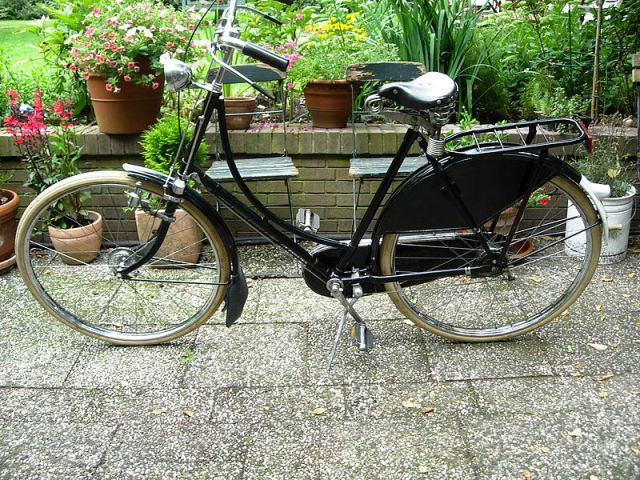
I’m standing at Redfern Station waiting to catch the train to Canley Vale to visit my mother who lives exactly 9.2 km from there along the Orphan School Creek bike track. Usually I catch a bus from the station to her house but today I have my brand new 6 speed Holland Vintage Cruiser with me. Some people have suggested that I’ve purchased a pedal powered bone shaker. That I should have bought an all purpose, all terrain, mountain bike if I was serious about riding in Sydney.  But I pointed out to these naysayers that when I took my new cycling machine to the local park it performed beautifully.  Albeit today’s ride is 18.4 km return, but how much harder can that be than catching the bus?

The train pulls in and I prepare to board the last carriage as recommended by Cycling NSW. Apparently less people use this carriage so it’s easier when travelling with your bike. But as the doors open I realise that other people have already taken this advice.
I get in, and with a combination of iron-pumping and power lifting that any gym junkie would be proud of, I push past a classy racer complete with a man in serious riding gear. He’s wearing a tonal blue, stretch polyester elastine, cycling jersey with reflective trim, and those super fitted cycling shoes with clattering outsoles that are meant to drive all your power into the pedals. In my shorts and t-shirt I suddenly feel under dressed. Next to him stands a man with a huge suitcase and a small carry on. He looks like he hasn’t slept for twenty four hours so I suddenly don’t feel so shabby.

I maneuver past them until I’m standing against the opposite glass doors which are the exact length of my bicycle. I’m not even going to think about what to do when they open at the next station. Then just as the guard’s whistle blows and the doors are about to close, an old couple, with a combined age of about 150, drag themselves and two overflowing shopping carts into the carriage. The train moves off, and I smile wryly at the other four souls, each with a ridiculously oversized item, crammed into the smallest part of an otherwise completely empty train. As we leave the station I realise I’ve already learnt Navigating Public Transport With A Bike Lesson #1: Never travel in the final train carriage, especially if it is the one closest to the lift.

Forty five minutes later we arrive at Canley Vale Station. I get off and so do the old man and woman. I wave goodbye and wheel my bike down the ramp and onto the street. The bike path scoots under the railway line and next to it is the Orphan School Creek, a tidal stream, that apparently rises and falls to the rhythms of the Georges River. This is the same creek that runs behind my mother’s house and the inspiration for today’s adventure.

And I’m off. I’m so excited I feel like I’m on a holiday. I pedal past the station car park, then the empty back yards of the main streets shop fronts, then the local sporting fields; but just as I’m starting to think there’s nothing here but densely developed suburb, I find myself travelling through a green corridor of Swamp Oak. The last vestiges of the Alluvial woodland that once lined the creek. I notice an effort has been made to regenerate the waterway here, with sandstone blocks reinforcing the bank, creating deep pools where a pair of ducks swim and a Shag suns itself on a rock.  In the nearby long grass, which is edged by Forest Red Gums, colonies of Ibis stride and Currawongs and Magpie-larks lurk.  I stop in this idyllic place to drink from my water bottle. I shake a few drops out of it and realise I should have refilled it before leaving home. Nearby a pretty cottage reminds me of the food and comfort that is only a few kilometers away. Thirsty I pedal on.

I cycle under the Cumberland Highway and suddenly emerge next to a narrow concrete channel with yellow grass mowed to the edge of the path and not a tree in sight. It’s like a desert but not as pretty. I’m now riding under the full glare of the morning sun next to a suburban drain. I’ll discover later that this is Australia’s second-warmest April on record, and the eighth driest. And today the temperature will peak at 29 degrees. But for now all I know is that the nearby road is lined with McMansions, there is not a human in sight, and my thigh muscles are screaming. I consider crawling down the steep sides of the canal to search for water but instead I knock down the gears and push on. It would be easier to harvest my own sweat than discover H2O in this desolate wasteland. This must be what Burke and Wills felt like on their return from the Gulf of Carpentaria. They found their camp at Cooper Creek deserted. Their support team had left only nine hours earlier after waiting for them for four months. Knowing that my support team has made lunch, I hope I don’t disappoint her by not arriving either.

Finally I cross Smithfield Road and find myself behind Fairfield Showground where the path makes its way to St Johns Park. Although there is still no shade it is now a lot prettier. Twenty years ago I taught History at the local high school so I distract myself with memories of innocent young minds thirsty for knowledge.

When I finally arrive at my mother’s house I can’t speak. And I can’t stand either. I lie on the cold Italian tiles for the first time grateful that she tore up that beautiful soft rose shag pile. I close my eyes and wonder if I’m going to have a heart attack. But there are no shooting pains travelling down my arms so I have time to think about my life and if I’ve done anything worthwhile. That doesn’t take long and my heart rate still isn’t back to normal. I can tell because I can’t hear my mother’s shouting even though her face is very close to mine. There is only a red roar in my head. Apparently the longer it takes for your heart rate to return to normal after a bout of exercise the more unfit you are. And apparently you should never just stop riding a bike and get off it, you should slow down, and allow the blood which has concentrated in your legs, to circulate back into the rest of your body.

And then I remember that I’ve completed only half the journey. There are another 9.2 km to ride to get back to the station. So far this adventure on my new push bike has left me internally shattered, my skeleton feels disconnected in a thousand places. If I do survive, it’s doubtful I’ll walk, let alone ride, again. In my panic I haven’t noticed that my mother has left my side. She must be calling an ambulance. It’s worse than I thought.

But then the soft smell of slow cooked bolognese ragu wafts by me and my mother returns.

“I had to stir the sauce,” she says. “I made it this morning. We just have to boil the pasta.”

And that’s when I start to feel better. The roar in my ears subsides and I realise everything will be o.k. I’ll eat lunch. Then I’ll hop back on my trusty town bike for the return journey. Or perhaps I can stay overnight, eat the rest of the pasta for dinner, and my mother can drive me home in the morning. The bicycle can live here. I’ll come back another day and discover the rest of the Orphan School Creek Bike Track. Or maybe I’ll just walk to the Gulf of Carpentaria instead.


Images: Bike, flickr.com/photos/23672158@N04 via Wikimedia Commons; Longstaff, Arrival of Burke, Wills and King at the deserted camp at Cooper’s Creek, courtesy Wikimedia Commons; Spaghetti Bolognese, courtesy Charlie Bigham’s Blog.

Posted in Habitat, My Mother and Me | Tagged , , , | 1 Comment

Two Weeks In A Night Club

Recently I spent some time in “Sydney’s #1 Nightclub”.  The home of Latin Soul on Mondays; Sydney’s Biggest Techno Party on Tuesdays; the Mid-Week Rave on Wednesdays; Hip Hop on Thursdays; Local Acts on Fridays; and the sickest House on Saturdays.

“That must be the World Bar in Potts Point,” I hear you say.

But I was there for the theatre.

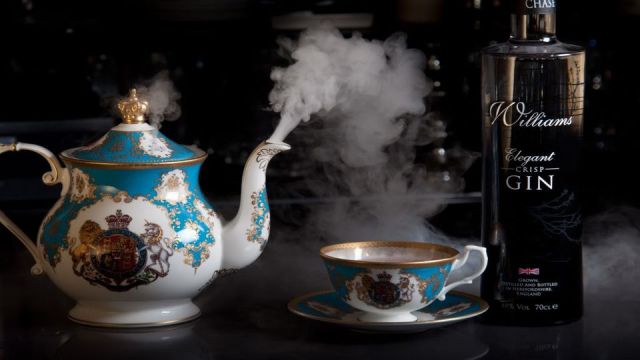
“Theatre? What kind of music is that?” I overheard one cool young thing ask the barman while he poured her cocktail into a tea pot.

“It’s Indie, it’s out there, it’s the latest,” he replied.

Only joking.

If I had you fooled there, especially if you were wondering why the words cocktail and teapot were in the same sentence, you’re showing your age. No cool young thing would be caught dead in a night club before 10pm. And bartenders (along with barristas, barristers, bakers, butchers and anybody else who idly asks you what you do for  a living) usually just look at you blankly when you say the word theatre. Try it.

We were staging a play in the World Bar’s Blood Moon Theatre at 7pm while the cool young things were preloading elsewhere (or perhaps just eating dinner at home with mum and dad).

Each night after our show we packed away our entire set as the chillin DJ’s for that night’s awesome gig swarmed around us, taking charge of the light and sound system, and our stage. Which is how I realised it was the dance floor. At this point dear reader, you’d be forgiven for muttering to yourself, “It’s not really a theatre then is it?”

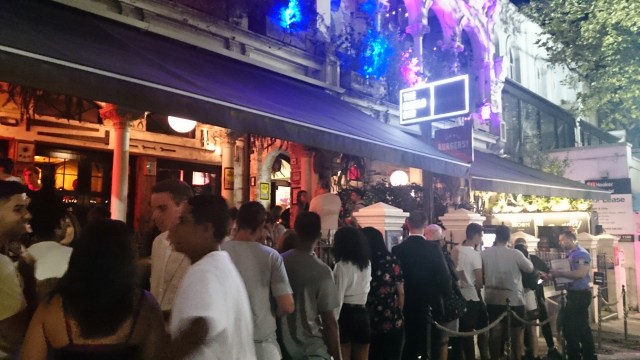
But this old band room was much cooler than your average theatre; an ‘activated’ space to use the current lingo.  And I was uber excited. We were making edgy, ‘pop-up’ theatre; one of the coolest art forms, in the neatest venue in town. The World Bar, in case you’re not aware, is a wicked place to party. Don’t believe me? Just ask the hundreds of patrons eagerly pushing to get in through the security cordon at 10:30 pm each night; as I was pushing, just as eagerly, to get out. But on our last night I found myself in the line with the hip party people.

The cast and crew had decided to stay around after the show for some celebratory drinks. Waving at the actors to save me a seat I’d made my way out onto the street thinking to deposit the set and props in the car I’d hired for bump out. It was parked just around the corner so within minutes I was back and ready for a drink at our after party. But I didn’t realise that after 10pm the security guards wouldn’t just let me walk back in. After all they knew me. I was the woman that danced a strange tango with them each night while yelling, “I’m with the theatre! Let me out!” But tonight as I approached the entrance the guard just looked at me blankly and told me to go to the end of the line. I backed away feeling deeply rejected; wondering what had changed in our relationship.

But as I stood in line I began to get excited again. I haven’t lined up to get into a night club for a few decades. Three to be exact. I admit I felt a little out of place; had I known I’d be clubbing I would have worn my sequined disco shorts and gangsta heels. Slowly the line edged forward and finally I was back at the front. The guard held his hand up and demanded my ID. I was flattered. Did he seriously think I looked under 18? Perhaps he just wasn’t wearing his glasses?

As if reading my mind he said, “It’s the law Lady.”

Suddenly I ‘got’ all the fuss about the lockout laws.

I dug around in my hand bag and a few minutes later I found my wallet. I handed him my driver’s license. Then I realised that he was waiting for me to stand in front of a huge machine with multiple screens.

From behind me came an impatient chorus, “Look at the camera!”

I looked and blinded by a flash, blinked, then opened my eyes to see a giant image of myself, eyes closed, on the screen.

“Again,” he said.

This time my eyes were open and so was my mouth. But that seemed to satisfy him.

Before I could ask, he said, “It’s the law Lady. We keep it on file so we can ban you if you cause trouble.”

Wow. Sophisticated.

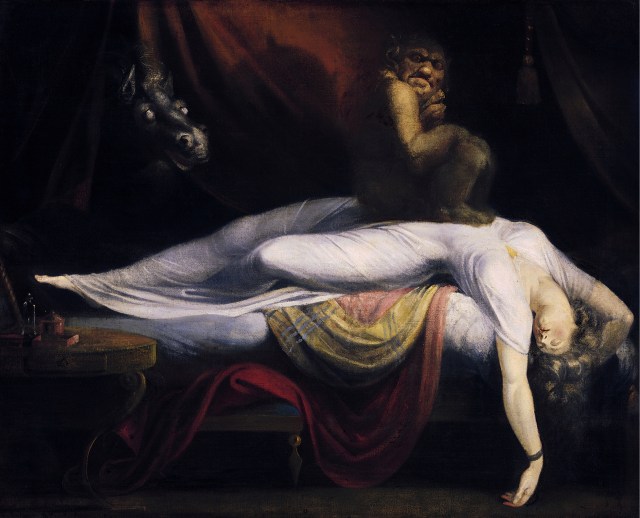
I made ready to finally enter the venue. But just as I pushed past that security guard another one appeared and asked me to open my handbag. He was going to search my bag? Was I entering another country? That’s when it suddenly dawned on me why all those young women lined up outside carried only tiny little purses that hung from their shoulders from the thinnest of straps. Perhaps this was also why they wore only the tiniest of dresses that also hung from their shoulders from the thinnest of straps. But they’d had the luxury of going home after work (or school) to change. I was still in my work place.

I opened my bag.  The security guard stared at the contents. Obviously not what he was expecting. No lipstick, mascara wand or compact, sorry I keep them in my clubbing bag. All I’ve got here is a script, note book, torch, scissors, clip board, bull clips, phone, camera, ticket stubs, cash box, water bottle, Blu Tack, Gaff tape. I asked him if he was looking for anything in particular.

“Alcohol,” he said. “You can’t take alcohol into a licensed venue.”

Luckily I’d left my hip flask at home.

But then he pointed at my water bottle.

“I’ll have to take that.”

“But it’s my water bottle.”

“You can pick it up on your way out.”

And so finally at 10:56pm I re-entered the venue I’d been in since 5:30pm that night.

As I headed to the table where my drink and my friends waited I heard the security guard call out after me, “And don’t forget there’s a lock out at 1:30am Lady. If you leave after that we won’t be able to let you back in.”

I was pretty sure that by that time the only venue I’d be in was my bed.

Images: DJ Jordan Munns/Courtesy of The World Bar; Long Island Iced Tea/Courtesy Yelp.com; Nightclub Line Up/ Writer’s own; The Nightmare, John Henry Fuseli/Courtesy Wikicommons

Posted in Spirit of Place, Theatre | Tagged , , | 1 Comment

View from the Bio Box

Last week the world almost ended while I was at the Old 505 theatre in Newtown. I’d been here before, mostly in the audience, but over this five night residency I was the tech operator for Blind Tasting, a beautiful play by Paul Gilchrist, performed brilliantly by Sylvia Keays.

old 505 bar

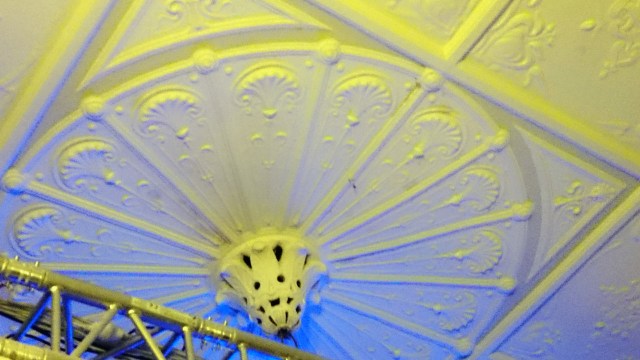
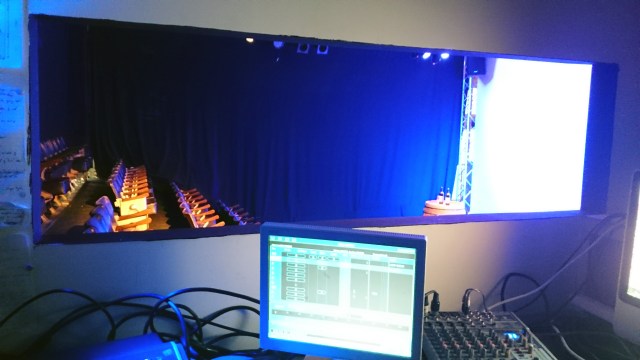
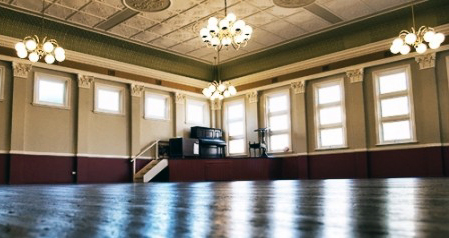
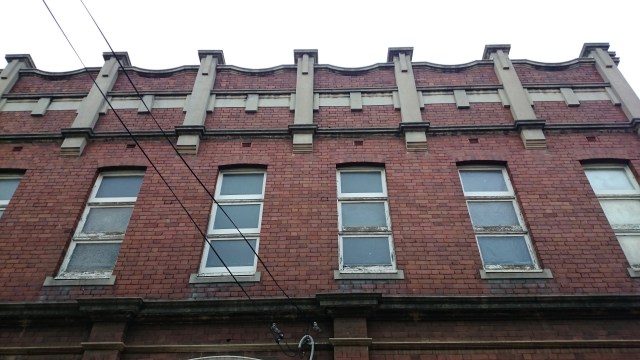
From the bio box I could view the stage, and watch both the audience and the performance through a rectangle cut into the partition that divides the original ballroom of the old Newtown School of Arts. It is now a theatre and a foyer with a well stocked bar. It’s comfortable, intimate and beautiful and if you look up, next to the rigging, you can see the original plaster ceiling panels. Not a bad place to be for the final showdown.

plastre ceiling with rigging.JPG

‘Teching’ a show is a little like being a DJ. I have a lighting board and a sound console and two computer screens, all with which to mix the mood for the play. And although it sounds complicated all I have to do is press the buttons in the right order. Our lighting designer had already created and programmed the light cues, and the soundscape had been taken care of by the director. It included rain and thunder, seagulls and cicadas.

By the fourth night of this five night run everything was going smoothly. I had wrangled my fingers so they tapped the cues at just the right moment. I was dancing back and forth between light and sound and feeling like Nicky Siano at Studio 54. But then suddenly disaster struck. I began to lose control of my console. I’d just activated Cue 5, the excited chatter and squawk of seagulls, when suddenly I heard the gentle patter of rain, Cue 8. In a panic I checked the screen. What was happening? Had I hit the wrong button? No. The arrow signifying Cue 5 still serenely blinked its little green light at me. Nothing seemed to be wrong but why could I hear two cues instead of one? And then sounds that weren’t even programmed into my QLab software began to tumble around me. The theatre revealed its own musical score, one that I had no authority over; the whistling of wind rattling old window frames and the rustling of paper, starting and stopping at uncanny moments.

I looked up expecting the audience to be looking around in confusion, the actor raising her voice to combat the shamble of sound, staring daggers at me that said, ‘fix this bloody mess now!’ But no. The show was blithely continuing on its amusing little path completely oblivious to the impending disaster unfolding in the bio box.

Bio Box

It was just me. And all of these computers. Suddenly I realized that those Luddite nightmares that had plagued me for years were about to come true. Any sane person knows that computers and robots are about to take over the world and force us into mindless slavery. More mindless even than consumerism. But I’d thought perhaps we had a few more years of human autonomy left; the remainder of my lifetime ideally. There was still so much I needed to buy. But alas it seemed that the time had come.  A technical catastrophe preceding the final annihilation.  An apocalypse. Armageddon. The end of the world. And our new technological masters had chosen to start their universal domination by taking over my soundscape!

I made myself calm down. After all, if it really was the end, I may as well enjoy it. If these computers were determined to take over the show, then perhaps I should use this as an opportunity to pop over to the bar and order a gin and tonic. I slowly edged away from the tech desk, and as I did, the sound of wind and rain got louder and louder, until it was all I could hear. But the beautiful Sydney summer day on the stage remained undisturbed. The audience didn’t know that it was raining. And suddenly I realized that it wasn’t the fabricated world that had gone awry after all. Apparently the ambitions of the machine intelligence before me were still dormant. It was the real world that had turned intemperate.

Let me explain. The bio box was actually the stage of the old dance hall we were in and behind me were the glass windows of the building, covered over with paper to keep out any light. It was through these that the sounds of rain and wind, that were whipping the world outside, were coming from. The audience were surrounded by walls and thick black curtains which is why they couldn’t hear anything except what was happening on stage. I breathed an enormous sigh of relief, which did turn a few heads, as I leapt back to the desk just in time to press the next cue.

I’d been so excited to be able to watch each performance and, like an alchemist, or a high tech god, add sound and light to the world on the stage. But now I realized that I was the one in a performance, which had its very own soundscape, administered by the great tech operator in the sky. It was as if he or she had been watching me all along, like I’d been watching the audience and the actor on the stage.

“All the world’s a stage. And all the men and women merely players.

Had Shakespeare been a tech operator too? Perhaps he’d also had strange behind the scenes experiences? Maybe I too would now be able to write thirty seven plays and one hundred and fifty four sonnets.

school-of-arts-480x282 cropped

Theatre is a strange medium. Odd things happen. The space itself becomes a new character with every new play.  With all this drama perhaps the walls retain the residue of all that’s been before. All of those characters created, and then left behind when the actors move on; each set laboriously made and then exuberantly unmade. And what of that old ballroom that preceded us, I wouldn’t have been surprised if I’d suddenly heard the whisper of satin slippers and the flutter of dance cards.

Theatrical productions are the result of a temporary illusion imposed on a permanent structure; a new way to look at the world, a view into someone else’s experience. In the theatre you can live vicariously the human drama, suspend reality for a time; enjoy for an hour or so, another world, another place.  And when we emerge, and the lights come up, and the actor takes their encore, we slowly come back to our own realities. But we’ve experienced magic, perhaps we’ve had an epiphany; and hopefully that means we take a little more joy, or empathy, back out into the real world with us.

Outside of NSofA building.JPG

Image of Newtown School of Arts Ballroom, courtesy of Eastside FM

Posted in Habitat, Spirit of Place, Theatre, Uncategorized | Tagged , , , , , , , , , , , , , , , , , , , | Leave a comment

My adventures with Princess Neroli

“The magic of the street is the mingling of the errand and the epiphany.” 1

It’s with a serious mission that I set off on this expedition to Carrington Road, but I’ve forgotten that these old industrial streets of the city’s inner west can seduce your soul.

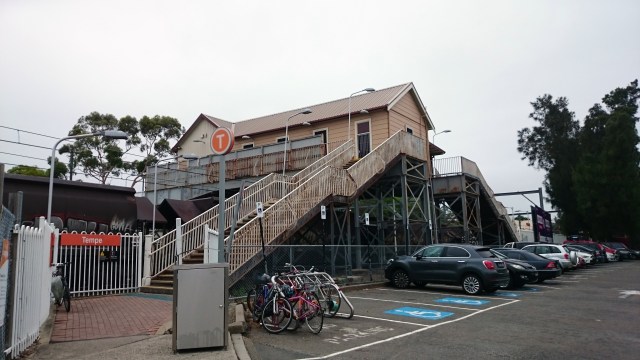
To get there I take the train to Tempe, a tiny station on the Illawarra line, the main line south. It’s before 10am and so I’m lucky that a train stops there every ten minutes. Later on it will be a different story. I alight and immediately feel like I’ve wandered into a timeless place; a forgotten pocket of our sprawling metropolis. I feel like I’m in a country town despite the rise of modern apartment towers only half a kilometre away at Wolli Creek. There is a deep silence, disturbed by passing cars and trains, only as a pebble disturbs a green pond.

Apart from the Eucalypts and Jacarandas that line the footpath next to the station there are few trees; the main inhabitants here are asphalt, steel and concrete. But as I leave the station and walk over the railway bridge I realise this density of tar and cement hosts a feral ecology of its own. At the corner, the ground beneath a bill board is carpeted in wild garlic, and creeping ivy spreads across the ring wire fencing that protects this important piece of urban infrastructure.  Tempe is where Diego Bonnetto runs his wild food foraging toursand now I can see why. And it’s the track head for the Two Valley Trail3, a series of walking tracks that fork between the Cooks River and Wolli Creek.

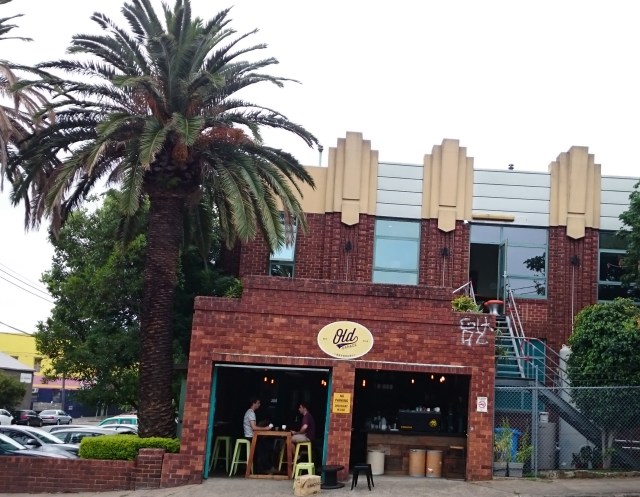
But a meander along the 13km of this waterside walkway will have to wait for another day because I’m here to visit two warehouses: The Sydney Prop Centre and New Directions, both on Carrington Road; a street lined with Alexander Palms and 1930s art deco factory fronts. I start with a fuel stop at The Old Garage Cafe. Travel makes me hungry so I order coffee, a home made raspberry muffin, and an oil change on the side.

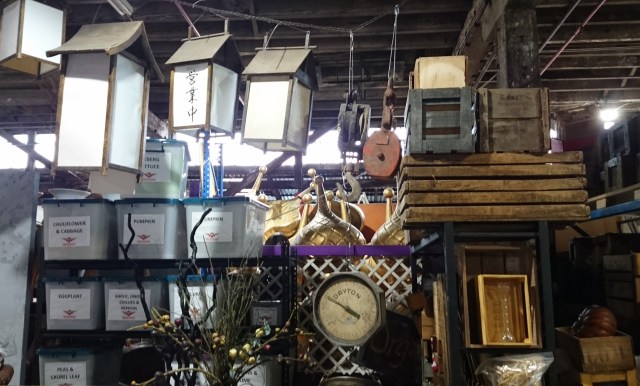
Once replenished I’m ready for the serious part of this jaunt. I first discovered Sydney Propswhile sourcing a vintage car bonnet for a theatre production and they came through with the goods. Today I’m looking for a wine barrel. (You guessed it – for another play!5) And they don’t let me down. This place is a cornucopia of artefacts, anything and everything you might need to put on a show, organise a paegent, create a spectacle. I wander through a menagerie of fibreglass animals. Or is it a zoo, a horse stud, a circus? I meander down the aisle of a whole aeroplane of purple reclining seats, past fat and skinny fun park mirrors, through crate loads of baskets, beneath swaying Japanese lanterns, into a colourful Moroccan souk.

Lanterns

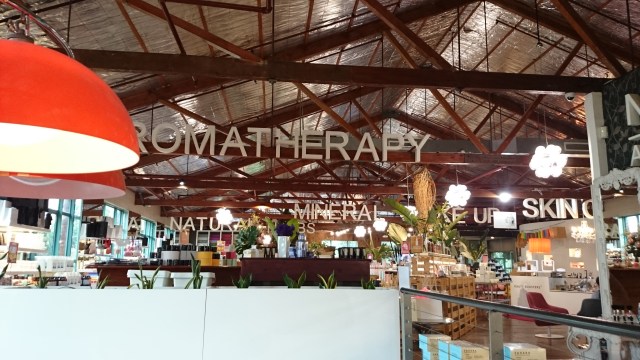
After enquiring about the hire of oak wine barrels I tear myself away from this wonderland and cross the road to my other destination.  Recently I’ve been dabbling in aromatherapy and I need a few items for my scented experiments. New Directionsis a natural skincare and wellbeing company.

Even though I’m not here for the essential oils I sniff and smell my way through Bergamot, Vetiver, Melissa, Lime, Rosemary, Cedarwood and Lemon Rose Geranium and finally pounce on the one I would really love to buy but can’t afford, Neroli. This is an intoxicating scent originating from 17th century Italy and named after Princess Nerola. A precious botanical oil, it’s distilled from the small white waxy flowers of the orange tree and known for its ability to soothe agitated nerves, relieve feelings of despair and reduce hypertension. It’s $47.30 for 6ml diluted in Jojoba oil so I limit myself to carefully testing it on my skin. I dab it on my pulse points, massage it into my temple, pat it onto my hair, rub it into my hands, and smear it all over my arms and legs; eyes closed, I breathe deeply the divine scent of bitter citrus blossoms with an undertone of dew soaked forest floor.

And after I’ve poured most of the bottle over me I decide it really is too expensive to purchase right now and drag myself away. I have to push past a bevy of TAFE students in black t-shirts participating in the Cosmetic Chemistry Workshops, and make my way around two ‘start up’ dudes who are loading latex gloves and beard nets into a trolley like they’re going out of style. But finally I’m in their packaging section where my blood pressure soars once again at the plethora of bottles, jars, caps, tins, canisters, eyedroppers, atomisers, spatulas, bags, boxes and wrapping.  I finally find the 100ml glass beaker and miniature glass funnel that I actually came for. Now I’m ready to leave. I slide across the wooden floorboards smelling like the Flemington Flower Markets at 5am on a Saturday morning. As I line up at the counter the salesperson begins to sneeze. Eventually it’s my turn and I quickly pay for my items and high tail it out of there.

Back at the station a lot of trains go by but none of them stop. It’s not a problem because I’m still blissfully sniffing myself. I’ve thoroughly enjoyed traipsing the magical backwoods of this forgotten Sydney suburb.

1 Rebecca SolnitWanderlust: A History of Walking

2 diegobonetto.com

3 wollicreek.org.au/tvt/

sydneyprops.com.au

5 subtlenuance.com/current-production

6 newdirections.com.au

(Images: map courtesy of wollicreek.org; orange blossom drawing courtesy of Wikicommons; all other photographs author’s own)

Posted in Habitat, Spirit of Place, Staycation, walking | Tagged , , , , , , , , , , , , , , , , , , , , , , , , , , , , , , | 1 Comment

Festive Season Survival Kit

What a year it’s been! It’s time to celebrate!

And here, no matter who your family or friends are, is a festive season survival kit to take with you everywhere and indulge in as needed. It’s easy. Just pack the following ingredients in an Esky with plenty of ice and keep handy throughout the festivities:

  • a six pack of common sense craft beer (available at good independent breweries, choose middle of the range in price, and don’t shake before you open)
  • a Mason jar of freshly whipped confidence cream (eat straight from the jar with a spoon, as needed, to remind you that your presence is a gift to family and friends. WARNING: don’t over indulge)
  • a chunk of fortified, well aged, blue vein questions (may be a bit smelly, and not to everyone’s taste, but persevere as it’s the Royal Easter Show Gold Medal winner in the Easy Flow Conversation category)
  • a mini herb and spice pantry to add zest and flavour to any event: cinnamon (for sweetness), basil (for empathy), bergamot (for gratitude or attitude), spikenard (to just stop thinking about the year that’s been, or your boss, or your in-laws, or your bestie that’s been behaving like a beastie or….), frankincense (for calm), and fennel (to aid digestion)
  • a plate of ‘be here now’ biscuits (if out of ‘be here now’, substitute self medicating grade cannabis)
  • a thermos of laughter (or strong coffee if driving)
  • and finally don’t forget the Christmas pudding, well wrapped in cheese cloth, it should fit nicely next to the half bottle of golden spiced rum; after all there’s at least a glass left over from soaking the fruit, and yourself, while cooking. As for the French Cognac that you used for feeding the cake after it was baked….


(Images courtesy of Giorgi family album and Wikicommons)

Posted in Experiments with Food, The Sages, Uncategorized | Tagged , , , , , , , , , , , , , , , , , | 2 Comments

Spirit of Place: Walking Burwood Road

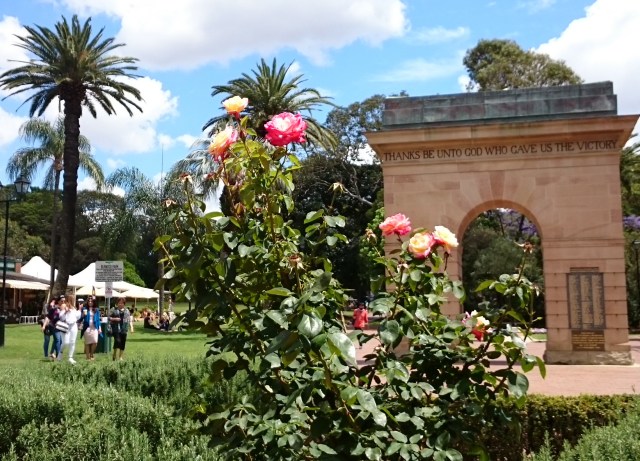
Burwood Park is a testament to the strange and unexpected wonders that can be discovered in public spaces. I began my wander near the WWI memorial arch where I’d spied the white umbrellas of the park cafe. And  I was glad for my coffee when I came upon the Sandakan memorial only a few meters further into the park. This commemorates the 2,345 Allied prisoners of war held captive in Borneo and forced to march from Sandakan to Ranau during WWII. Only six of them survived.

On this beautiful  sunny day in early November I contemplated the awful suffering of the thousands of men and women caught in world conflicts.  But as I continued to explore, the newly green grass on the cricket oval reminded me that it was spring, and the four months without rain had ended only two days before.

After spotting an outdoor performance shell, a giant chessboard, a mini lake, a community centre, a memorial to Confucius, and a multitude of Ibis, I left this unique public garden and walked south along eclectic Burwood Road. Burwood lies 10 kilometres west from the Sydney CBD between two of the old Aboriginal tracks that became Parramatta Road and Liverpool Road. Burwood Road stretches from  north to south joining the two.  Perhaps because of this geography, and the placement of the railway station just on the half way point, Burwood is one of those suburbs that despite the advent of a Westfield’s, has remained a lively strip; a mix of Middle Eastern restaurants mingling seductively with East Asian eateries. Sahara By The Park, Golden Globe Seafood, Sydney Dumpling King, Momiji Japanese, Mint Vietnamese, Little Nepal and Mee Noodle House, to name a few.

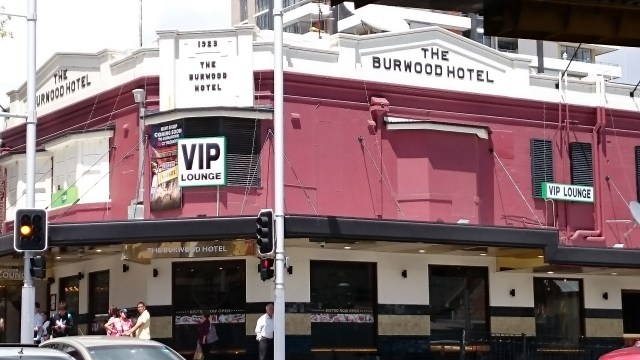
Burwood Road is grungy, never without traffic, especially buses; and the footpaths are crowded with commuters waiting to get on those buses, and pedestrians weaving their way between the station and the shopping centre. And there are smokers and beggars and dawdling couples; and dogs waiting for their wranglers outside cafes. And there are also two pubs: The Burwood Hotel and the Avalon Hotel.

Inside the Burwood Hotel the long counter of the bar has a glass wall behind it revealing the once hidden kitchen of the Burwood Eating House. This is where, according to their website, ‘East Meets West’. And so as you order your drinks you watch the white clad chefs juggle the pots and pans that will become Roasted Lamb Rump with pomegranate pearls and Wagyu Beef Burger with house pickle sauce or Korean Chicken Drumsticks with chilli, lime and peanuts.

And then there is the second pub, The Avondale Hotel. There are no glass windows here. The outside is a bottle shop but not one where you step inside to browse. The bottles of booze are displayed in a glass case set into the front wall of the pub and you ask for what you want through a barred window. Reminiscent of troubled outback towns rather than the main street of a lively Sydney suburb.

On the ground level is the front bar which I go into. The walk up and down the street has made me thirsty. There are three old fellows sitting on stools with a wall of screens above their heads. Every dog race in the country seems to be being broadcast loudly but despite this the men turn and look at me as I enter. Immediately one of them calls out, “Ladies are upstairs Love,” meaning the toilets I presume.

Obviously that’s the only reason a woman would ever step in here, the logic might run. And I’m not sure that they’d be wrong I think, as I climb the wildly out of place gold plated staircase, which conjures in my imagination the opulent casinos of Macau, not an old suburban pub in Australia. Or perhaps this is still a segregated pub, and it’s the Ladies Lounge they were directing me to. But at the top of the stairs is the VIP Lounge. I’m tempted to have a quick flutter. Luckily I also spot the door to the Ladies (toilet not Lounge) right next to the gambling den. I do need to go, so I silently thank the old blokes who are obviously mind readers.

When I come out I’m tempted by a long, open corridor; the covered balcony overlooking the railway line. This pub may have a narrow frontage but it hides architectural depth.  And then I realise that this pub has a Bistro too, with what look like generous serves of classic pub food.

It isn’t enough to walk around Burwood I’ll have to come back and eat here, over and over again. Perhaps I’ll need to move in for a few months to really experience it properly. Unfortunately this suburb has classy old bones, reflected in the property prices. People want to live here, either in brand new high rise apartments or in beautiful old Federation houses that sit elegantly on cultivated quarter acre blocks. But that’s the beauty of being a tourist in my own city: window shopping and crowd gazing are free; and I can come back as many times as I want.

When we walk around our cities we discover unknown terrain, and later when we relive the small delights of that new landscape in our  memories, although it remains communal civic space, it also becomes uniquely ours. In so doing  history is rendered to a human scale and the future becomes cause for hope.

Posted in Spirit of Place, walking | Tagged , , , , , , , , , , , , , , , , , , , , , , , , , , , , , , | Leave a comment

The Next Big Thing

“Bowl head! Bowl head!”

“Stupid wog! Look at her hair!”

I’d thought my 1920s Parisian style bop was quite sophisticated.

“Did your mother put a bowl over your head to cut your hair?” one of them snarled, as the rest of the group of Year 8 girls crowded around me.

“No,” I wanted to say. “My hairdresser recommended this as the perfect style cut for me.”

But I didn’t. Not just because I was petrified and knew that opening my mouth at this point could result in a black eye, which although it would match my hair, wouldn’t suit my face, but because it wasn’t true. My mother had cut my hair. But she hadn’t used a bowl.

So I just cowered quietly on the bench praying that they would get bored soon and notice one of their other victims; perhaps someone who’d stupidly thought they should actually wear the regulation school uniform. When they did finally leave I finished my salami sandwich before going to sit in the library for the rest of the lunch break. The library was a safe space that the bullies didn’t venture into, probably because they couldn’t read.

The next time my mother suggested a haircut I pleaded with her to take me to the hair dresser. Strangely she agreed and booked me into the salon that she went to. Maybe her scissors were blunt that day. Whatever the case, I was grateful.  I needed a new look. I scoured the pages of Vogue, Vanity Fair and Dolly and it quickly became obvious what the most sophisticated hairstyle of the moment was.

The royal wedding had only been a few months earlier. It was attended by three hundred and fifty guests and watched by about 750 million people on TV worldwide; evidence that the hairstyle worked. If I adopted it, not only might the bully girls show a little more respect but maybe one of the boys I had a crush on might even look my way.

When I arrived at school on Monday morning I proudly waited for everyone’s reaction. No one said anything until music class when one of the girls asked the teacher if we could listen to some Duran Duran.

“Of course not,” the teacher replied.

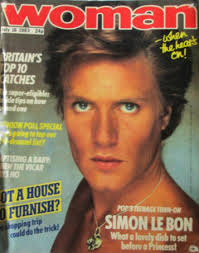
“Maybe Simon Le Bon can sing for us then?” she said as she pointed straight at me, while everyone else writhed around on their desks shrieking with laughter.

“Boy cut! Boy cut!”

“Stupid wog! Look at her hair!”

I’d thought my smooth short layers looked just like Lady Di’s.

“She looks like a boy! Her mother took her to the barber!”

It’s taken many years to get over this childhood trauma. I count myself lucky, so many other victims of bullying have not come out of it so well. But I still feel insecure at the hairdressers. I don’t trust myself to make a choice that won’t rip the scars off old wounds. And it’s as if the stylist with the shears in their hands senses my fear because no matter how firmly I request just a 2cm trim, they always try to convince me to try something new.

“Maybe a chin length, Parisian style bop?” they suggest.  “Very chic. Would really suit your features.”

And they’re fascinated by the giant white stripe on the side of my head that makes me look like a skunk and is no doubt the result of traumatised brain cells. I can never tell if they are trying not to laugh at the fact that I refuse to colour it or are wondering if its the next big thing.

Posted in My Mother and Me, The Sages, Time | Tagged , , , , , , , , , , | Leave a comment

10 Things To Do In between Croissants

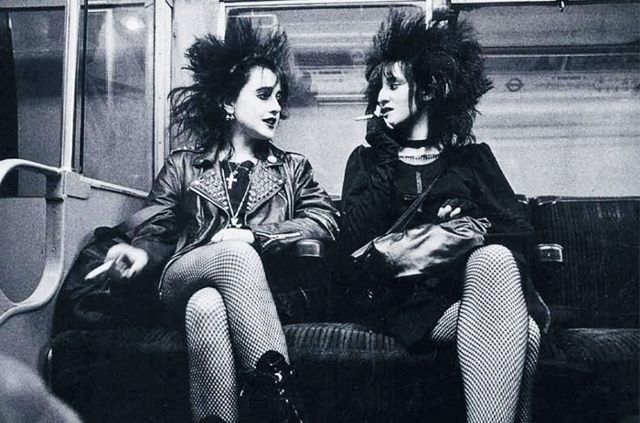
When I was at university I read Simone De Beauvoir’s memoirs and fell in love with the French Existentialists and their subversive lifestyle. It seemed they sat in Parisian cafes long into the night, drinking coffee and cocktails and talking about all the important things: love and sex, politics and philosophy. Not only did they address the perennial question: How to Live? but they also knew how to dress. Think black: turtleneck and trench coats, berets and boots. I immediately adopted this Rive Gauche uniform but succeeded in looking more like a member of an unsuccessful punk band rather than a member of the French Resistance.

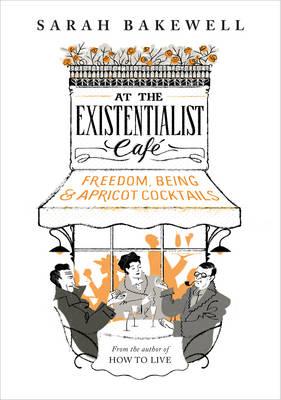
So it was with great excitement, but also a little trepidation, that I picked up Sarah Bakewell’s At The Existentialist Café: Freedom, Being & Apricot Cocktails in a bookstore recently. Would the adventures of Sartre and De Beauvoir and the other philosophers in their milieu leave me wondering if my life had been a complete waste with no meaning or purpose whatsoever to my existence?

Fortunately before I could succumb to my existentialist angst I got sidetracked by what the author was saying. “Existentialists think that what makes humans different from all other beings is the fact that we can choose what to do. In fact we must choose: the only thing we are not free to do is not be free…. I may be influenced by biology, culture, and personal background, but at each moment I am making myself up as I go along, depending on what I choose to do next. As Sartre put it: ‘There is no traced-out path to lead man to his salvation; he must constantly invent his own path.’ ” 1

What a terrifying thought. But perhaps it was also hopeful. Even though I may not have done anything exciting or worthwhile with my life so far, I could always choose to do so in future. Even though I was currently sitting in a cafe eating a lovely chocolate croissant it didn’t mean that I’d have to do it tomorrow. I was free to choose what to do with my life. Tomorrow I could begin training for the half marathon instead.

As I read on I was pleased to see that the author agreed with me about the hope stuff. She questions what Existentialism might mean for us today in an age where we have become uncertain about freedom and bombarded by the idea that there are so many forces beyond our control in the world. She suggests that although we find this a disturbing idea it is also reassuring; letting us off the hook of personal responsibility. “Sartre would call that Bad Faith. …Moreover, recent research suggests that those who have been encouraged to think they are unfree are inclined to behave less ethically.” 2

xat-the-existentialist-cafe.jpg.pagespeed.ic.omwghPfd7L

Oh. Maybe it wasn’t so hopeful. I ordered another croissant.

This philosophical stuff requires lots of energy as does living in a world where there is so much to do and yet where doing anything at all seems so hard. Had I forgotten how to live freely? Was I just an  amoral automaton? I needed to take responsibility, and perhaps order a cocktail.

I decided to make a list. You’ve got to start somewhere and anyone can make a list. I spent a little bit of time on the heading for my list, after all it’s the first thing that I will read each time I use my list.

How to beat the forces of evil currently ruling the world (or things to do in between croissants):

  • make a date to see a friend
  • have a screen free day
  • read another book;
  • go for a walk in the park.
  • become informed about an issue;
  • do your job with care;
  • smile at a stranger;
  • give money to someone that’s hungry;
  • sign a petition or send an email to an MP;
  • order another croissant


1  https://www.theguardian.com/books/2016/mar/04/ten-reasons-to-be-an-existentialist

2 p319  At The Existentialist Café: Freedom, Being & Apricot Cocktails, Sarah Bakewell, Vintage 2016

Images: Punks, courtesy of ‘A History of Bad Girl Clothing’ blog; and book cover: At The Existentialist Café.

Posted in democracy, What Are You Reading? | Tagged , , , , , , , , , , , , , , , , , , | 3 Comments

Rage against the dying of the light

I hate Vivid.

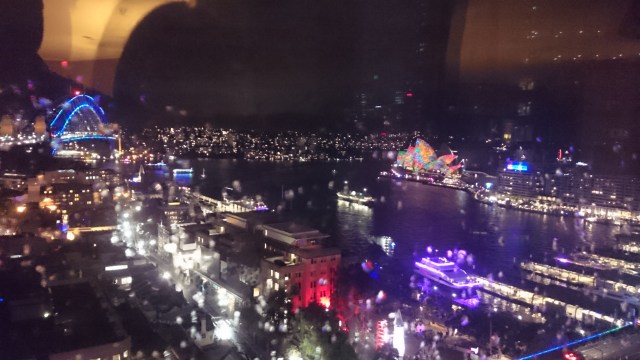
Or I did. That’s because essentially I’m a snob. If a whole lot of people like something then you can be sure I won’t be caught dead anywhere near it. And that’s what I thought when I first heard about this over rated light show. A modern example of bread and circuses for the masses.  Little did I know that it had started in 2009 as a light festival show casing energy efficiency. I only knew that hundreds of thousands of people flocked into Sydney every June long weekend to stare at the liquid-like images projected onto the sails of the Opera House; or stood mesmerised as the walls of the MCA turned into bowls of coloured jelly.  And perhaps I hated Vivid because it had hijacked this long weekend that marks the beginning of winter – the least holiday like of seasons. A time to retreat and wait for the warmth to return.

But then I remembered that the Saturday night of the Queen’s Birthday long weekend was  traditionally Cracker Night. Walking home from school on the Friday you’d spot the various wood piles on street verges all ready to become bonfires. And in just about every garage was a stash of fireworks purchased from the local shop; Throwdowns, Bungers Roman Candles and Catherine Wheels all ready to turn the average back yard into a mini war zone. And on the Monday morning the inevitable news stories would appear reporting how many hands and fingers had been blown off over the weekend.

In our household it was also  the weekend closest to my father’s birthday which fell on the 13th of June.  That was a great excuse to gather family and friends around the back yard barbecue. I remember burying potatoes in the embers; to be cooked slowly and eaten late that night, long after the cake and fireworks had disappeared. But although the long weekend is still with us cracker night has long been abolished and the majority of children now retain all there fingers into adulthood.

As a child I wouldn’t have thought it possible to remove such an event from the calendar. It would have seemed like getting rid of Christmas. And equally as an adult I would not have thought it possible that I would come to love Vivid.  So what happened to change my mind?

Perhaps I’m no longer a snob.

But more likely it could be because of the huge amounts of time I now spend on public transport.  I refuse to look at my phone like everybody else and instead insist on looking around like a crazy person.  So the other night I was sitting on a train at about 10 pm just looking around. And I realised that everybody else was also looking around. In fact the train was really crowded and no one was looking at a screen.  I was in a carriage filled with happy parents and sleepy children. I went into a panic. Had my refusal to look at my phone meant that I’d missed a major event? I knew that Harry had recently been here but had the Queen actually made an appearance for her birthday weekend? What other reason could there possibly be for all these people to be out in this big, dangerous city on this cold, wet winter night? And that’s when I remembered Vivid.

So the next night I went into town to see for myself what was going on. I wandered with the masses, caught up in the incandescence that had transformed our little harbour city into a winter wonderland. There were ethereal columns and human crosswords, fluorescent sunflowers and giant luminous mailboxes; and an electric forest of Morton Bay Figs. And there were talks and walks, activities and artworks, and of course food everywhere. I even spotted teenagers looking calm and happy, talking quietly in groups or looking vaguely off into the distance. This was something I hadn’t seen since the year 2000 when Sydney became the Olympic city and I was convinced that the government had pumped happy gas through the city streets to keep us all calm. Were they at it again? Because what else could explain my enchantment. This sense of wonder and joy despite the pouring rain. This was magical. This was the perfect winter festival.

And suddenly I realised that Vivid had replaced the cultural tradition of Cracker Night. And I was transported back to the innocence of childhood. So despite my initial misgivings and the shallow satisfactions of paranoid conspiracy theories, I am now an avid Vivid fan. I’ve decided that an event that brings people together and dispels the temptation to hibernate is a good thing. Because as Dylan Thomas once wrote, ‘Do not go gentle into that good night…Rage, rage against the dying of the light.’ Particularly if while raging you meet the light globe, goggle wearing animals that can now be found in our Botanic Gardens during the festival. How could you not love ‘Rowi’ the electric Kiwi and her chick?

First image: Vivid Sydney 2016, James Horan/Destination NSW via Wikimedia Commons

Posted in Habitat | Tagged , , , , | 3 Comments

Little Green Cannon Balls

I got a text from my niece recently asking me to help her with her homework: an assignment on migration. It reminded me that I’m a migrant. In fact this year is the 40th anniversary of my family’s arrival in Australia.  These were the questions she asked me to answer:

  • Who is the person that migrated to Australia and where did they migrate from?
  • When did they migrate to Australia and where in Australia did they settle?
  • What was life like for them in their new country?
  • Any other information?

So I told her that I’d arrived in Australia with my mum and dad and younger sister from South Africa in 1977. And that we’d sailed for 17 days from Cape Town to Sydney on the cruise liner S. S. Ellenis and eaten a lot of food from the buffet.  I said that because I already spoke English when I arrived, my life as a migrant has not been as hard for me as for others who didn’t speak English very well; such as my parents who’d originally moved to South Africa from Italy. But then I remembered that because I had a South African accent when I arrived I was teased by the boys in my third grade class. And that reminded me of high school, when because of my Italian background I got called a wog. But who wasn’t called something they didn’t like at school. My friend in Year 10 was called a ‘chook’ by our maths teacher. Good old Mr Cook meant it as a term of affection like ‘petal’ or ‘possum’ but as you can imagine the rest of the class didn’t get that.

But it was the last question that had me stumped. Any other information?  The rule in homework, and in exams, and in job interviews, is answer every question. Don’t leave anything blank. But I really couldn’t think of anything else. Until a few days ago.  And although it’s too late for my niece’s homework assignment here’s my answer:

My family came to Australia with everything we thought we would need for life in a new country. In the hold of the ship we had our car, our TV and a giant trunk filled with clothes, manchester and household appliances. But it wasn’t until almost 40 years later that I discovered what we’d left behind.

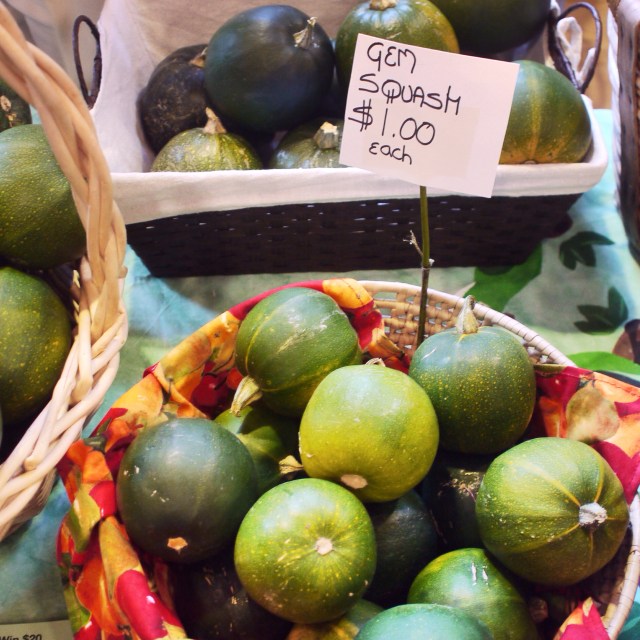
Gem squash. Not quite pumpkin, not quite zucchini.

I’ve lived in Australia for all this time without so much as seeing a single gem squash. And then the other day while in a fruit shop I spotted a pile of little green canon balls and knew them immediately. The last time I’d eaten these little vegetables I was seven years old.  I was so excited to see them again that I bought three of them which I immediately regretted because not only did they look like little cannon balls, they were each about as heavy as one.  But I managed to carry them home without herniating the discs in my spine.

I had no idea how to cook a gem squash. After all, as a seven year old I didn’t have to do my own cooking. They would arrive in front of me, stringy, soft and with lashings of butter, ready for me to dip my spoon and sink my teeth into. I rang my mother.  A waste of time; being a busy pensioner, with life membership of various community clubs, she wasn’t available for advice. So in the absence of an elder I searched the internet. I was in luck. A very handsome website advised me to ‘cut the squash in half and steam for five minutes’. I placed the squash on my chopping board and got out the heavy duty knife that I use on pumpkins but succeeded only in jamming the knife into the side of a very hard vegetable. After about fifteen minutes of grunting, groaning and smashing I almost took off my hand but the squash remained whole.  A few more swings of the chopping board and a swear word or two and I finally managed to ease the knife back out of the squash. I used my remaining fingers to google again, this time taking the advice to ‘puncture the squash several times with a fork and boil for five minutes.’  By this time I was beginning to wonder if re-enacting this childhood memory was worth the effort.  Perhaps these little vegetables, and not Apartheid, were the real reason we’d left South Africa.

After fifteen minutes of boiling and a few more pokes with the fork there was still no sign of softening. This was obviously going to take a little longer than I’d been led to believe. I would need to while away some time. I got a book and stood next to the stove so as not to forget about my boiling pot and burn the house down. I read several chapters about an English couple who bought an olive farm in Sicily.  The frustrations they faced paled into insignificance once they uncorked the first bottle of their very own olive oil. But it had taken a lot of effort to get there – they’d had to renovate the farm house, prune the olive trees, harvest the olives and transport them over the hills to the mill. It gave me hope.  My own culinary adventures were a little less difficult.

After 30 minutes I checked the squashes. There seemed to be some give. I took them out and placed them on the chopping board and tried again to cut them in half. This time the knife slid in and after a little hacking, and a bit of banging, the squash cleaved in two. But alas much of the inside remained rock hard. So back into the pot they went, and on with another few chapters of the book I went. I had just reached the beginning of their second olive harvest when the smell, no scent, emanating from the pot began to play tricks with my mind.  I was transported back to my three foot self standing next to my mother at the stove in our Johannesburg kitchen.

I dragged myself back to my life as a five foot two inch adult and lifted the half squash out of the water. It was soft.  I remembered to be patient and laid it upside down on a plate to drain. Then I placed it in a bowl, spread butter onto it and tasted. I had waited forty years to relive this experience. And for the last hour had begun to suspect it wouldn’t be worthwhile, but the nutty, stringy consistency was exactly what I remembered.  As a seven year old I could only have described them as ‘yum’; now I could only say ‘more’.


Posted in democracy, Experiments with Food | Tagged , , , , , , , , , | 2 Comments