Crying in the Cathedral

In Australia, left leaning, liberal thinking, chardonnay sipping, bleeding hearts types are living through hopeless times. It seems there is very little we can do except wait for the next election.

At least there is a next election.

I was reading recently about the English Civil War. That bloody time in English History when Parliament went to War against the King. The King lost. Parliament won. And so we have a system of government where one person doesn’t have the arbitrary power to make all the decisions. (Although you would be forgiven in thinking we’d slid back to those times when reading about the Federal Government’s new laws which would allow the Minister to strip dual nationals accused of terrorism activities of their Australian Citizenship without any need for the courts to decide if they are guilty first.)

Battle_of_Naseby

In explaining why that society dissolved into warfare the writer said, “Where there is no common ground there is only the battle ground.” Democracy (our parliamentary and legal institutions, our rights and responsibilities, such as voting), is the common ground where we must fight out our ideas and convince the majority to come to our side. It is not enough to wait for the next election, hoping that things will change, we have to prepare the ground and sew the seeds for a better harvest than the last one.

But how to do that?

John Lennon once said, “If everyone demanded world peace instead of a new TV, we’d have peace.”

Instead we’ve demanded new TVs (and mobile phones) and what have we got? A whole lot of new TVs and mobile phones and a big problem that we are all too scared to even talk about anymore let alone do anything about.

Perhaps this is why I cried in the cathedral.

I am not a practicing catholic, but it is the spiritual tradition I have inherited. I love the meditative peace and beauty of St Mary’s Cathedral and I wanted to light some candles for a sick friend in hospital. And I wanted to thank God for the new pope who had just announced his encyclical about climate change.

Candle_flame_(1)

I don’t believe in miracles but sometimes they happen.

As I knelt praying I felt myself cracking. All of the walls that I had erected, walls of words and ideas, held together with a solid mortar of apathy and defensiveness, crumbled; leaving my soul suddenly exposed. At least I had one. When you’re constantly walking past people begging for money and ignoring them it can become hard to believe you’re still human.

It was like being defrosted by a soft electric current. I cried. I felt. I woke up. And the result was that when I returned home, and to all of the emails asking me to sign petitions, write to MPs, donate money, I was able to read them and choose what to do calmly and with a warm heart. I no longer felt useless and despairing. I felt recharged. I had the clarity that comes only after a good session of meditation on a candle.

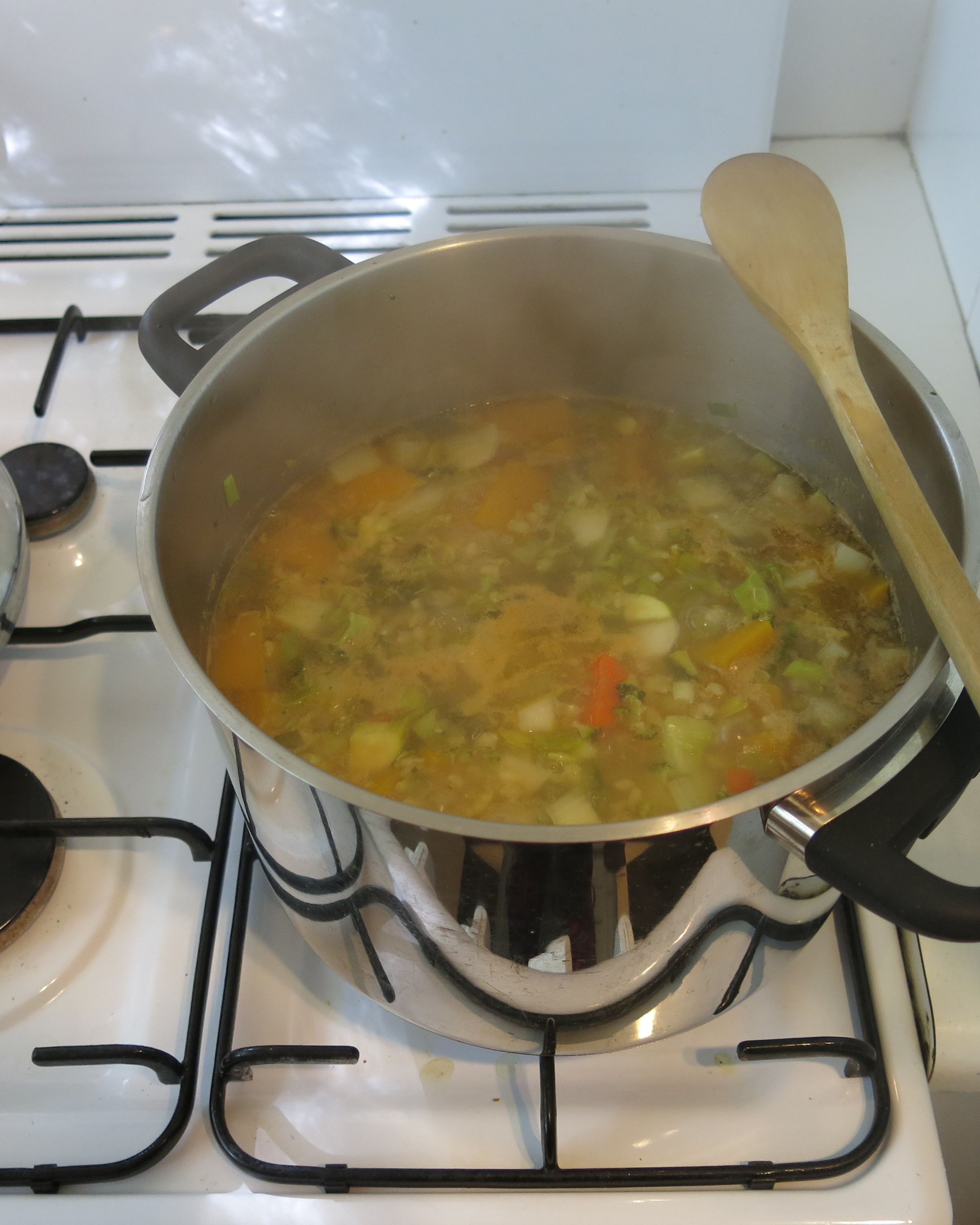
And so this morning, in the same spirit of meditation, I made soup.
011

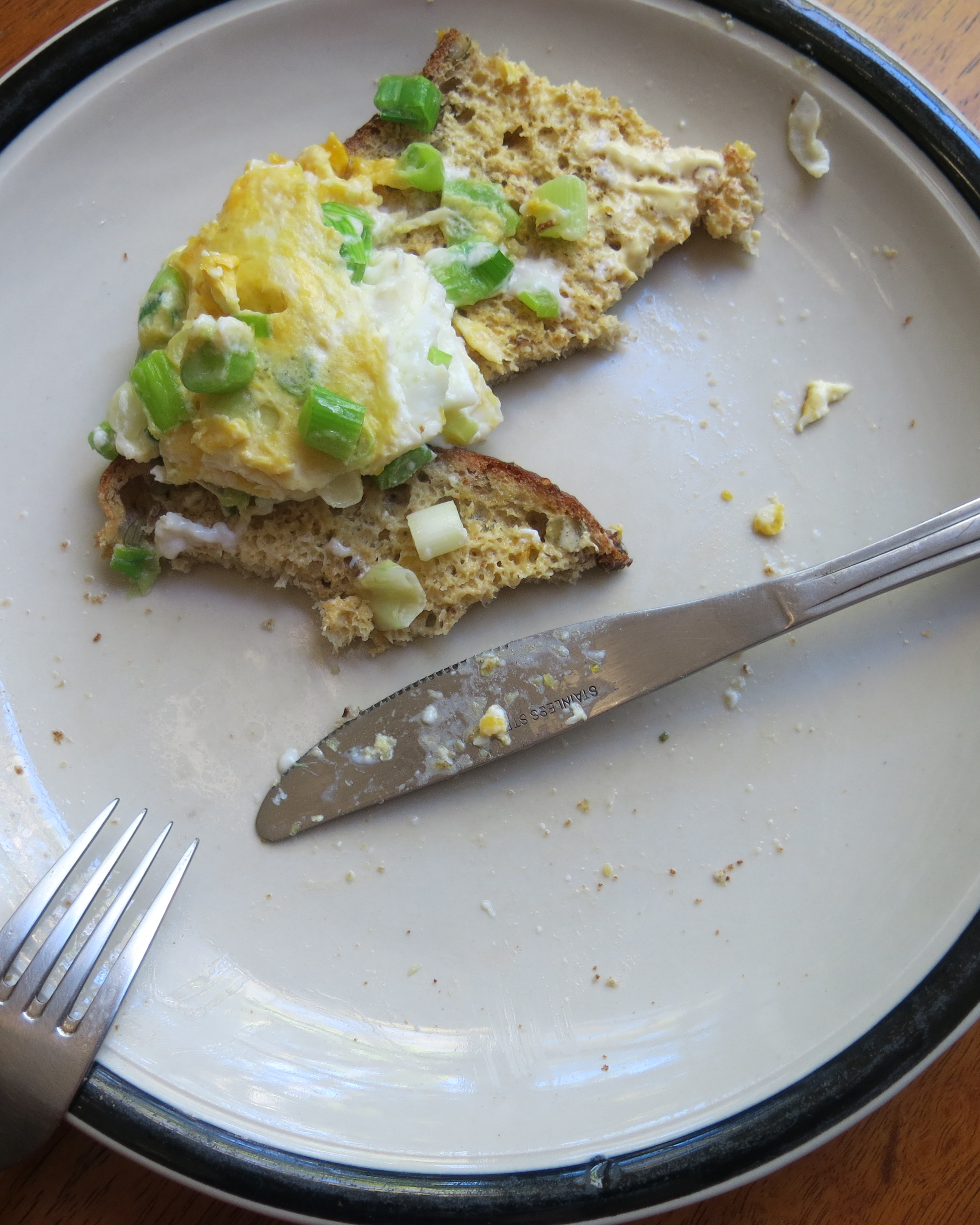
As I was stirring the shallots in a little olive oil, softening the first of the vegetables, I had a memory of my father at the stove, cooking us brunch on a Sunday.  He would make scrambled eggs with shallots on slices of toasted Italian ciabatta. Such a simple meal, the shallots sliced thinly and heated in the pan with some olive oil, then the eggs cracked in and stirred until they were just cooked.

One of the reasons I live such a blessed life is because of my father. He insisted that his daughters go to university, get good jobs and be independent. He’d migrated across the seas, leaving his family behind in order to earn money to keep them all out of Italy’s post war poverty. There is a simple courage in doing what needs to be done, in maintaining the hope alive that the future can be a better one.

Our world seems so complex that it can be a temptation to retreat to a place of quiet ignorance. Sometimes as I watch us ignore some of our seemingly intractable political issues I feel like I’m back in middle ages when peasants would pray for a benevolent monarch to make all the decisions for them. Yet we have so much more power than those faraway peasants sitting helplessly around their medieval hearths. We cannot behave like lambs when we are lions. We need to feed and nurture ourselves and then boldly step into the fray.
002

So I began with lunch. I took some of the shallots out of the soup pot and put them in a pan. Then once the soup was simmering, I made some toast and cracked two eggs into the pan.  Within minutes I was eating a meal straight out of my childhood.

Perhaps it is the same spirit of hope and pragmatism that keeps us feeding ourselves and our loved ones that can also help us do what needs to be done before the next election.


Photo attributions: Battle of Naseby unknown artist [Public domain], via Wikimedia Commons; Candle Flame by Jon Sullivan [Public domain], via Wikimedia Commons

Posted in climate change, Experiments with Food | Tagged , , , , , , , , , , , , , , , , , , , | 6 Comments

I vote therefore I am

It was 1978, Thursday, late night shopping. I was at Liverpool Westfield’s but I wasn’t buying anything. I was witnessing my parents’ Australian Citizenship ceremony. Yep, right there on Centre Stage. You know, where they hold the fashion parades, and where Santa sits in his throne at Christmas time waiting to be is swamped by small children.

In those days shopping malls didn’t have eateries so Centre Stage was also the cool place to hang. Everyone, well not everyone, the kids from the high school, and the unemployed kids who wished they were still in high school, and a whole lot of old people who needed to sit down, could be found there. On this particular night there was no fashion parade, and it wasn’t Christmas, instead Westfield’s was hosting a parade of New Australians.

This was still in the day when we called people “New Australians”, and also reffos, wogs, wopps, dagos, gino, guido, greaser etc. And it was before we took being Australian so seriously. Nowadays citizenship ceremonies are conducted on Australia Day at places like Parliament House or at local councils, and there is a dress code.

So there I was standing next to my parents on the stage, staring back at the old women that had stopped to rest on the plastic chairs and the teenage boys who were gawking at the ‘reffos’. My family weren’t actually refugees. Although we’d come to Australia by boat, it was a rather large one, a cruise ship actually. And the only risk we took was that of dying of clogged arteries from night after night at the buffet.

We were very lucky. We’d been able to bring with us everything we needed for our new life in Australia; stored safely in the cargo hold was our television set, the family car and all our household appliances.  We’d been told we’d need these to pass the citizenship test. We didn’t bring our house because my parents wanted to participate in the Great Australian Dream.  Which is how we found ourselves two years later, the proud owners of a McMansion, complete with exorbitant mortgage, in a brand new suburb with no public transport or infrastructure.

I got to stand on the stage, but it was my parents that took the oath on the bible even though they were atheists. In acknowledgement of their new status they each received a citizenship certificate and the gift of a palm tree from the local council.  I thought that would come in handy to sit under on the average 38 degree western suburbs summer day.  I don’t think you have to swear on the bible anymore to become a citizen but you still get a palm tree. You can always tell the suburbs that have a lot of new citizens by the number of palm trees.

Although this event happened thirty seven years ago I have recently begun to worry about it. On that night that I stood on the stage with my parents I never actually got my own citizenship certificate.  Apparently my name appeared at the bottom of my father’s certificate. But my father has since passed away and I don’t know where that piece of paper that made him (and me) an Australian is. And recently my passport expired. I had no travel plans so I didn’t renew it. So now it seems that it is only the electoral roll that stands between me and statelessness. Which is why, every election day, I’m at the polling booth bright and early, to prove that I’m an Australian and to make sure I don’t miss out on a democracy sausage.

Posted in Time | Tagged , , , , , , , , , , , , , | 1 Comment

“They do not love us as much as we love them”

Do animals make statues of us?

Why do we make statues of them? Why do we make statues? Perhaps to represent, remember, immortalise, inspire? I guess humans make statues, like humans make art.

But why statues of animals?

Animals have been our companions, our prey, our predators. They are our slaves, colleagues and heroes. They are our food. (Unless we’ve chosen to be vegan.)

I remember watching a documentary and hearing an orca handler say, “They do not love us as much as we love them.”

Is that why we make statues of them? Perhaps it is a way of grappling with the unknown, an expression of amazement that these so very familiar yet unfamiliar conscious others share the planet with us.

While walking through the Sydney CBD recently I noticed just how many statues of animals there are. From domestic pets to wild others, here are five of my favourites.

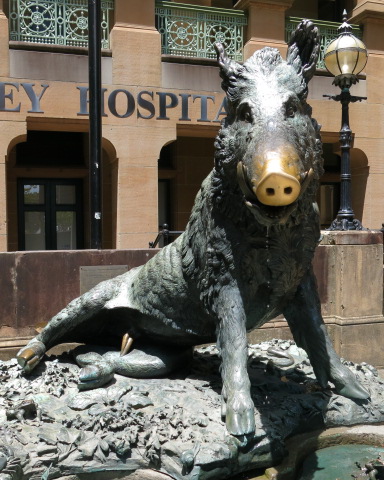
Il Porcellino: Ask a Sydney sider to meet you by the pig and they’ll know exactly where you mean. But the Sydney Hospital Pig, whose nose everybody rubs while they are waiting, is actually a wild boar. He was presented to the The Sydney Hospital and Sydney Eye Hospital in 1968 by the Marchessa Clarissa Torrigiani in memory of her father, Dr Thomas Fiaschi and her brother Dr Piero Fiaschi who were eminent surgeons at the hospital.

http://www.seslhd.health.nsw.gov.au/SHSEH/history/IlPorcellino.asp

009


Trim the Cat: Trim is famous for being the first cat to circumnavigate the Australian main land. Matthew Flinders is famous for going with him. The bronze statue of Trim by sculptor John Cornwell stands very close to Café Trim, on a window ledge of the Mitchell Library. Nearby is an inappropriately large statue of his chief of staff.

020


Royal Botanic Gardens: There are lions and sheep, bloodhounds and horses, birds and frogs, to name a few. You can spend whole afternoons wandering the gardens playing spot the animals.

http://www.rbgsyd.nsw.gov.au/welcome/royal_botanic_garden/tours_education/self-guided_tours/art_and_memorials

Botanic Gardens statues-1


The Tank Stream Fountain, Herald Square Circular Quay: Commemorating Sydney’s first water supply, the fountain abounds with animal life, evoking the woods and sunlight of War-ran, the old Aboriginal name for Sydney Cove. This sculpture by Stephen Walker was donated to the City of Sydney by John Fairfax and Sons Ltd in 1981.

http://history.cityofsydney.nsw.gov.au/waterexhibition/WaterSupplySewerage/TheTankStream.html

Tank Stream 1


Islay: He was reputedly Queen Victoria’s favourite dog. Now he lives in Sydney and begs for a living. He begs for the deaf and blind children of Australia with the help of radio personality John Laws. If you don’t believe me, you’ll have to listen to the recorded message that comes with the statue. Islay’s statue was created by sculptor Justin Robson.

http://www.sydneyarchitecture.com/cbd/cbd3-007.htm

097


Posted in Habitat, Spirit of Place, The Animal Kingdom | Tagged , , , , , , , , , , , , , , , , , , , , , , , | 1 Comment

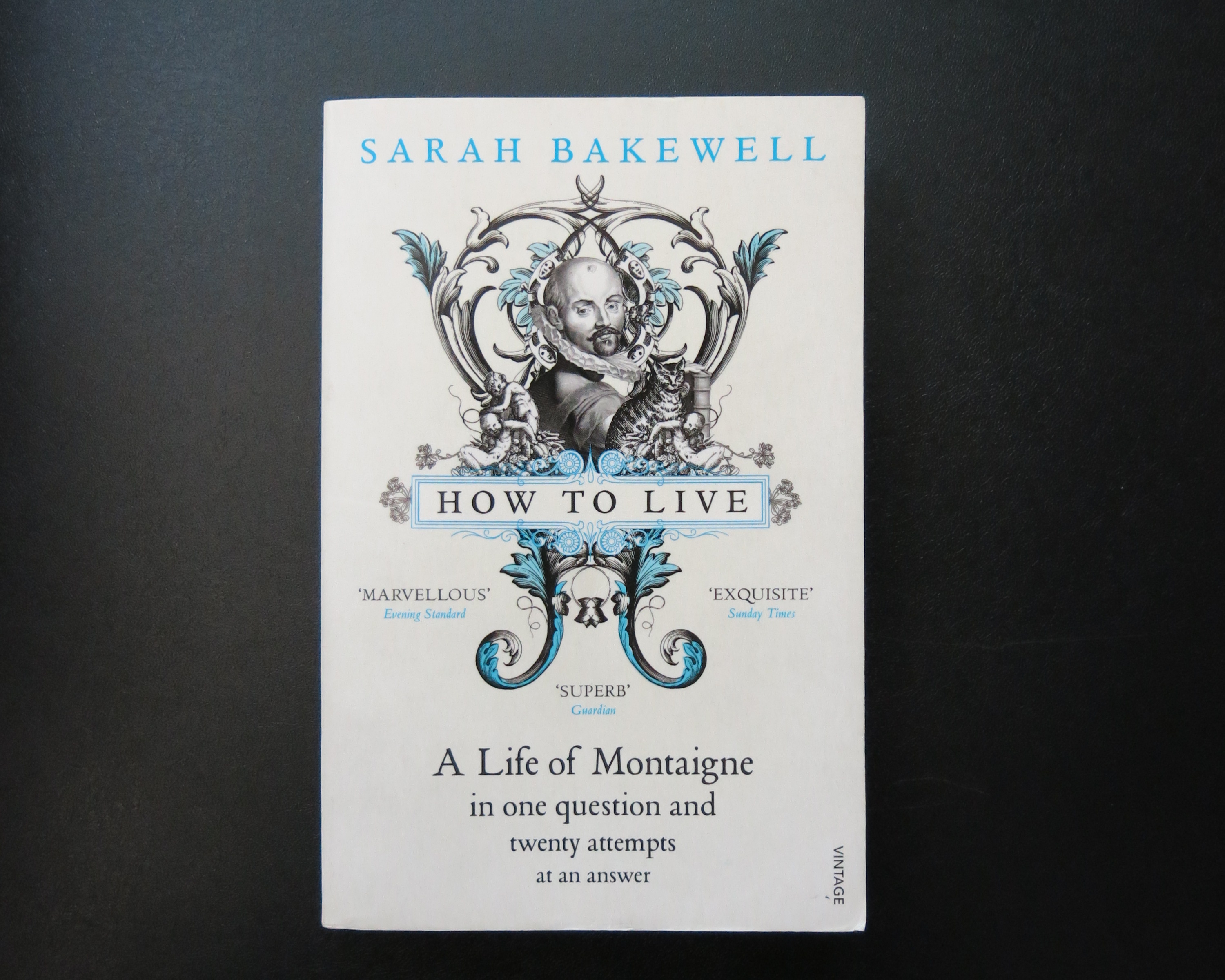
How to Live by Sarah Bakewell; A Life of Montaigne in one question and twenty attempts at an answer

Political assassinations, religious rebellions and civil war, this pragmatic Renaissance philosopher lived through them all, and in so doing practiced the art of living.

Sarah Bakewell playfully adopts the Socratic method to investigate the life of Michel de Montaigne.  Using the question, ‘How to Live?’, one that Montaigne relentlessly asked himself,  she provides twenty attempts at an answer. The result is a book that feeds the soul and inspires the mind; a unique take on the self help genre.

Montaigne was a writer and statesman. He was also a householder, landlord and winegrower. He mined his life experiences to write his famous Essays – nothing was too personal to write about.  Not his near death experience after a riding accident; not his love for his best friend and the grief that overwhelmed him at that friend’s death; and not the everyday little tricks that allowed him to control his emotions and make decisions. He was the inventor of the very modern habit of writing about himself to explore the world.

In the era before antibiotics, Montaigne died of an infection brought on by kidney stones. After his death his heart was removed and placed in the church of Sant Michel, and his body was interred in a raised tomb in a church in Bordeaux. It was not to be his final resting place. His remains were removed and reburied several times over the centuries. Perhaps an appropriate end for ‘someone so attuned to the flux of the world, and so aware of how all human endeavours become muddled by error.’ 1

Similarly his essays were revised, rewritten and republished in many forms. But they survive as a reminder that nothing is perfect or permanent. A reminder that life must be lived every day; and that perhaps in the living we may find some answers.

001

1 p326  How to Live by Sarah Bakewell; A Life of Montaigne in one question and twenty attempts at an answer, Vintage 2011

Posted in Book Review | Tagged , , , , , , | 1 Comment

The Curse

I am thirteen years old. I have just discovered blood in my underwear.

I have heard the horror stories. I have witnessed the distress in the girls’ toilets. I know this is a curse. I know that now I should not touch pickles, wash my hair, or go swimming.

I call my mother into the bathroom to tell her what has happened. She hugs me; an enormous, all enveloping hug. Her joy at the news is infectious. Her response is not what I expected. Perhaps I’m wrong. Perhaps this isn’t a curse after all.

Taking my hand she leads me to the kitchen. It is a sunny, suburban Sunday in the early 1980’s. Uncles, aunts, cousins, all gathered together for a family feast. My mother stands with her hands on my shoulders and before I realise her intention announces, “Today is a celebration. Today my daughter has become a real woman!”

I am horrified. No one has ever mentioned this part of the curse. All eyes turn towards me and then I am engulfed by a chorus of congratulations. I hear the pop of a cork, glasses are filled, and everyone drinks to my health. This doesn’t seem like a curse. This seems like celebration. I am now a woman.

Many years later, sitting in a coffee shop with a friend, celebrating the birth of her first child she tells me how after an excruciating eight hour labour she and her partner became the proud parents of a beautiful baby girl.  She also tells me that her mother, on first seeing her new grandchild, exclaimed to my friend, “Now you’re a real woman!”

I was stunned. Had I heard correctly? Yes, my friend’s mother had congratulated her on becoming a ‘real woman’ at the birth of her first child. What, I wondered to myself, was she before the birth? And for that matter, what was I? I didn’t have any children. Maybe I wasn’t a real woman after all. Maybe my mother had been wrong. Had I just imagined the mood swings, the cramps and the bloating every month?

I didn’t think about this incident for many years. Then recently I bumped into this friend again. Her daughter had just finished the HSC. She confided to me that she’d had her first hot flush just as her daughter sat her first exam.

I was shocked. My friend was experiencing menopause. We were the same age. If it could happen to her, then it could happen to me! But then I remembered my friend’s mother’s words at her grand daughter’s birth. I remembered that I wasn’t a real woman. Did that mean it wouldn’t happen to me?

Is our biology a friend or enemy? Perhaps just a firm frenemy.  At birth, and sometimes before, a human child is labelled as something other than its precious self; as a boy or a girl. We travel through childhood with this label firmly pinned on our lapels. Then at puberty we begin to participate in a world that is even more definite; a world that tells us that women are like this and men are like that. A world of worry over whether we fit these new labels.  A world where our sexuality and our intellects collide. And then into adulthood and the decisions about what to do with ourselves and our bodies. And what happens to us at the very other end of life? Is human life no longer precious because it is no longer biologically useful?  Is this what the keepers of the curse would have us believe?

Although it was agonisingly embarrassing, I am grateful to my mother for her joyful response to my newly arrived womanhood all those years ago. It allowed me to question my expectations, the future, other people’s responses, labels. So now, with the expectation ahead of excruciating night sweats, hormonal instability and more hair on my face, I say it’s time to throw off the final remnants of the curse. Real woman or not I’m going to celebrate what lies ahead. I say bring it on. And with that I pop the cork from a mature red and drink to life in whatever form it takes.


Posted in My Mother and Me, The Sages, The Sex Diaries | Tagged , , , , , , , , , , , , | 1 Comment

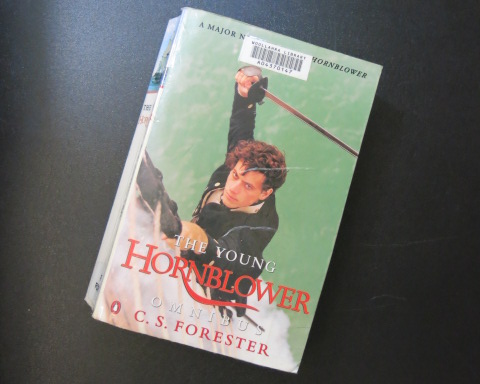
The Young Hornblower

Sea sickness is one of Horatio Hornblower’s weaknesses, as are honesty, courage, ridiculous modesty and a penchant for chasing the enemy rather than prize money.

Hornblower is a Royal Navy Officer during the French Revolutionary Wars and the Napoleonic Wars. We meet him as a gangly seventeen year old Midshipman boarding his first battleship. Hornblower is destined to become a great navigator, Captain of his own ship and eventually Admiral of the Fleet. I know this because several years ago I read all 10 novels and watched the TV Series which stars the scrumptious Ioan Gruffudd. So now I am starting the adventure all over again.

Hornblower

Read this book on a lazy weekend or if you are holidaying at home.

Your couch will become your boat as you and Hornblower engage the Spanish Armada on the high seas, demolish the defences of Napoleon’s armies, and evade court martial at the hands of a mad captain. You’ll only tear yourself away from these swashbuckling adventures through exotic lands and treacherous times to make short work of your dinner. Then you’ll race right back to read on into the night with a good claret.

Read this book if you want a valuable lesson in the ancient craft of sailing.

You’ll learn about hoisting sales, tacking and wearing around, sailing close to the wind, and navigating in all weathers. I found myself admiring the enormous skill required to be a sailor as well as reflecting on the long and often bloody history of humans and the sea. Boats have long carried adventurous souls – from the earliest canoes; the square rigged ships of early explorers; the leaky boats of refugees; to the giant cruise and cargo ships that circumnavigate our modern globe.

Read this book if you have an important decision to make.

You will find yourself rising at eight bells, stoically eating your ration of ship’s biscuit, complete with weevils, squaring your shoulders and dealing competently with whatever crisis comes your way. After all you’re not weathering a hurricane on the Atlantic while being fired at by a 12 pounder armed frigate.


The Young Hornblower Omnibus by C.S. Forester. Comprising Mr Midhsipman Hornblower, Lieutenant Hornblower, Hornblower and the Hotspur

Posted in Book Review, Time | Tagged , , , , , , , , , | Leave a comment

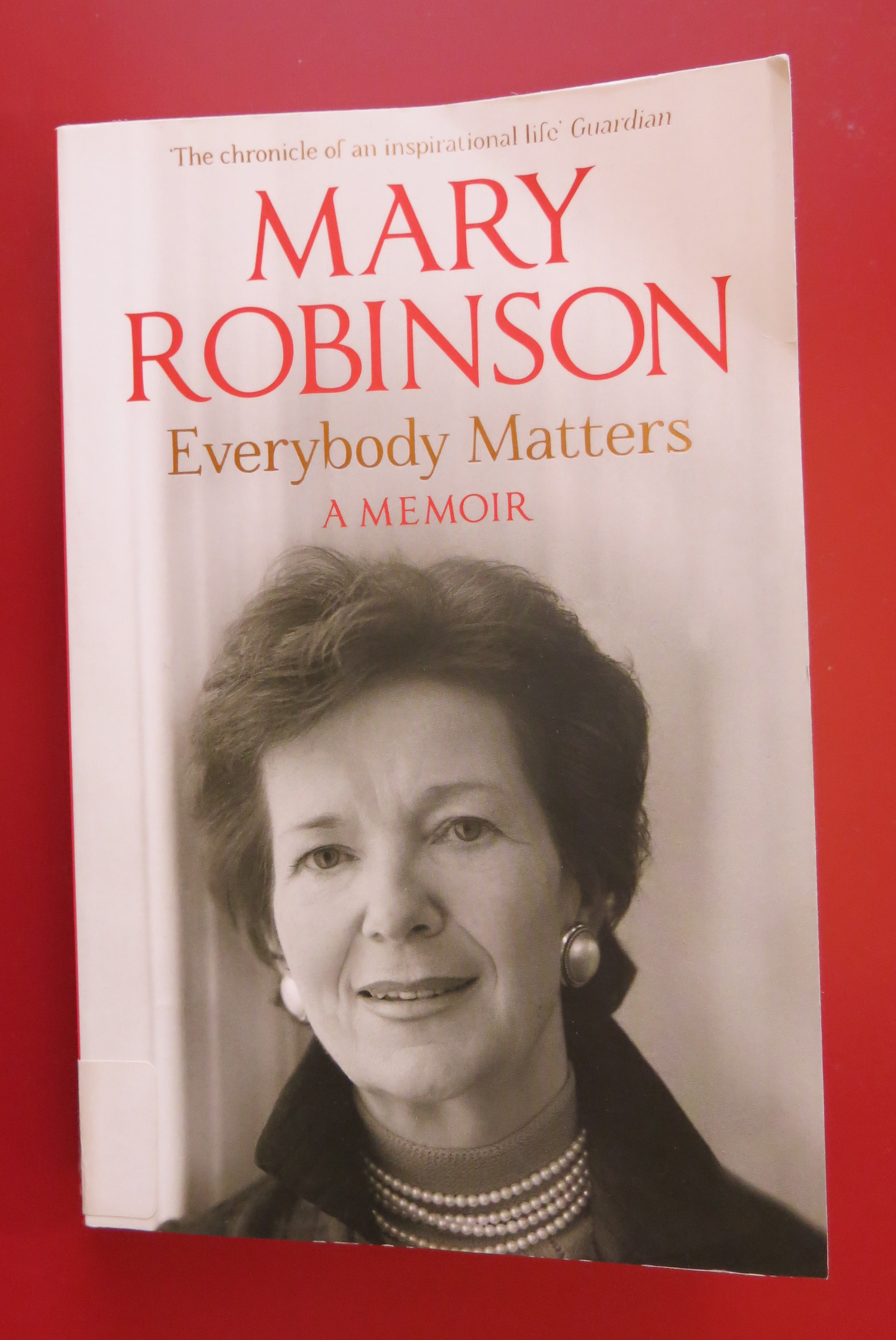
Everybody Matters by Mary Robinson; A Memoir

Someone once famously said “democracy is a verb, not a noun.” For a long time I didn’t understand what this meant. Then I read Mary Robinson’s memoir.

Mary Robinson is someone that does. And in the doing she has made the world a better place, and inspired and empowered others to do the same.

Mary Robinson Cover

As a lecturer, legislator, President of Ireland and United Nations High Commissioner for Human Rights, she tackled seemingly intractable problems, advocated for the world’s poorest, and spoke truth to power. She visited those ravaged by war; and brought the calm light of hope to some of the world’s darkest places.

Her memoir is the kind of read that makes you grateful there are such amazing people in the world. The title of her book says it all. She has lived her life fiercely defending the belief that everybody matters, and has fought courageously and compassionately for the dignity of every human in need.

This book makes you want to put on your best suit, get a good haircut, and get elected to high office. But then there would be so much to do! This is what stops most of us in our tracks. But probably only after buying the suit and getting the haircut.

2013 Hodder & Stoughton


Posted in Book Review | Tagged , , , , | 1 Comment

Optimism by Bob Brown; Reflections on a life of action

“Optimism, like pessimism, feeds on itself.”1

Bob Brown is a commonsense radical whose lovely memoir beats off the twin spirits of despondency and despair that whisper, “Why bother?” and “What can you do?” in our ears.

His moving and inspiring anecdotes had me laughing and crying. From aversion therapy (read electric shock treatment) to cure his homosexuality in the 1960’s and rafting down the Franklin River in defiance of the Tasmanian Government’s dam project in the 1970’s, to, more recently, his time as a Senator in the Federal Parliament; the stories he tells remind us of the exhilaration and ultimate satisfaction that comes with taking calculated risks.

But what resonated most strongly with me were these words, “… the intelligent are unsure. They weigh things up. They look beyond the here and now. They worry about legacy and about grandchildren and using finite resources wisely … some simple advice for the heavy thinkers: get over it. Mulling things over while the stupid and greedy ravage the planet is, after all, not very intelligent. Worse, it is a certain road to depression. Get active rather than depressed. It worked for me.”2


Optimism by Bob Brown

1 and 2 pxi, Optimism by Bob Brown, 2014 Hardie Grant Books

Posted in Book Review, climate change, Habitat, Time | Tagged , , , , , , , , | Leave a comment

Sex Medicine

My mother had just thrown a handful of spaghetti into a pot of boiling water when she casually asked, “Are you using sex medicine?”

“Sorry?” I said, thinking I must have misheard.  I was setting the table for lunch; a task I usually devote all my attention to.

“You know.  Sex medicine. To stop babies.”

Now let me go back in time for a moment.

When I was thirteen my parents took charge of my sex education. They threatened to kill me if I got pregnant out of wedlock.  And so developed my phobia of pregnancy.  And an expectation that my mother and I wouldn’t have intimate conversations about contraception.

To be fair to my parents, when I was growing up, they suffered Broken Clock Syndrome: when a migrant references practices in their home country not as they currently might be, but as they where when they left. Typically it manifests itself as being very strict with their children but later discovering that other parents in the home country have moved on.

And my parents’ suspicions would have been aroused by the romance novels that I was addicted to at the time: the ones with the scantily clad heroines and bare-chested heroes on the cover. Rather than actually speaking to boys I would lock myself away in my room for hours devouring these novels. Of course in these stories the protagonists never actually had sex. And certainly never got pregnant. They always got married though, right after the last page.

Luckily, I survived my teenage years without having a baby.  So you can imagine my surprise when one day in my early thirties my mother asked me about contraception. I had by then been living with my boyfriend for five years. My parents, it seemed, had adapted quite well to their new country but I guess my mother was curious as to why we hadn’t yet announced a wedding date and when she would become a grandmother.

And so she decided to ask: “Are you using sex medicine?”

“Sorry?” I said.

“You know.  Sex medicine. To stop babies.”

“You mean the Pill?’ I said.

“Yes. Yes. The Pill. Are you using the Pill?”

“Yes.” I said. “I’m on the Pill.”

“This is why you don’t have babies. You should stop this medicine. You should have babies before it is too late.”

“But I don’t want a baby. I’m not even planning to get married.” I replied.

“If you want a baby you don’t need to be married. You have the baby. I will support you.”

Oh My God!

So this is how far we’d travelled. We’d shot straight past the iron clad stipulation that babies must be conceived in wedlock. It seemed that now my mother couldn’t care less if I was married, and was in fact recklessly encouraging me to abandon my contraception.

“You know you have a clock inside you.”

“Sorry?”

“ A clock. To tell you when to have babies.”

“The biological clock? That’s not real. That’s just how people explain…”

“You don’t want to break it. Then it will be too late for babies.”

Luckily, just as I was about to repeat that I wasn’t considering having a baby anytime between now and eternity, the doorbell rang, and I was saved by the arrival of the other lunch guests.

Although it happened quite a few years ago, remembering this conversation with my mother made me reflect on how lucky I am to be able to make my own decisions about my body. All over the world many people are persecuted for making choices about their sexuality that others don’t agree with.


Posted in My Mother and Me, The Sex Diaries, Time | Tagged , , , , , , , , , , , , , , , | 4 Comments